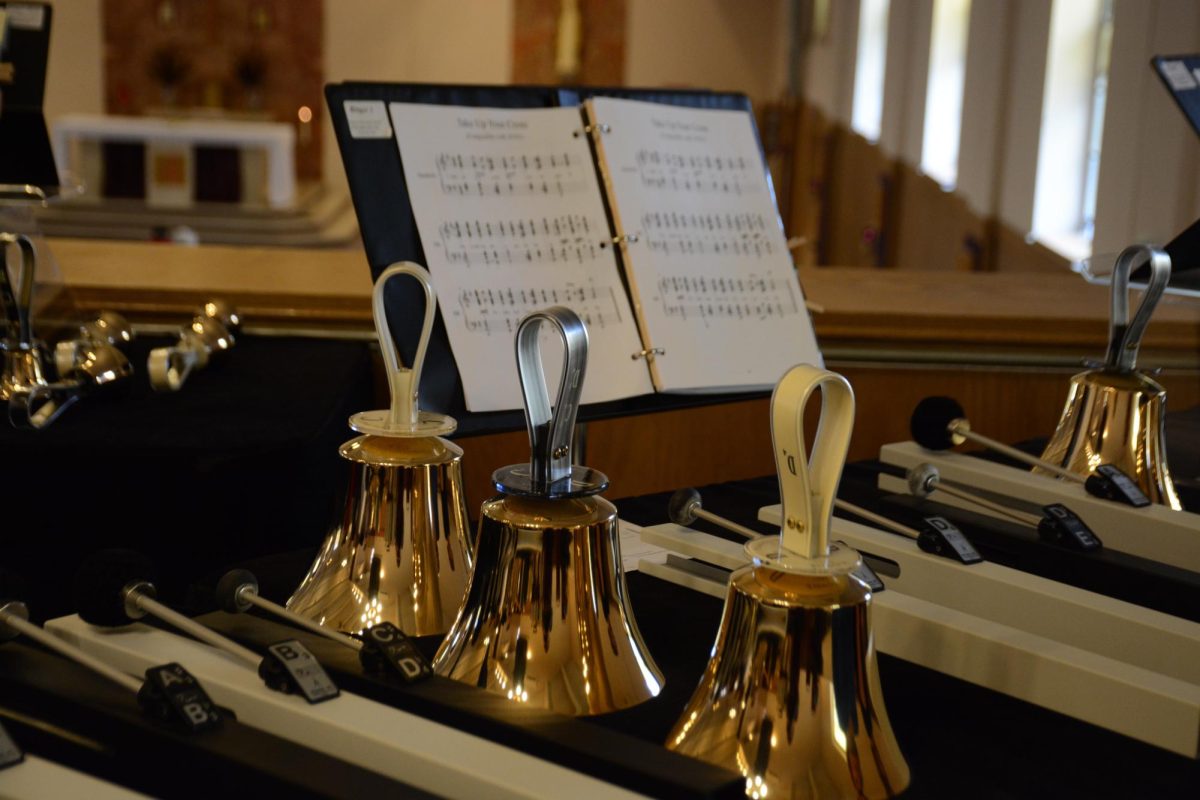
Many people play instruments throughout their lives. Some have played briefly in elementary school, some play just as a hobby, and others develop the pursuit of music into their careers. The bottom line, however, is that all of these people can glorify God through their music making abilities.
To a vast number of instrument players, playing music is just about hitting the correct notes. Whether they are taking private piano lessons as a scrawny 7-year-old or a high schooler in Orchestra class finding the correct pitch, many don’t look deeper into the music besides nailing tricky passages or difficult rhythms. However, composers utilize the specific placement of notes to convey deep emotional (and even spiritual) meaning.
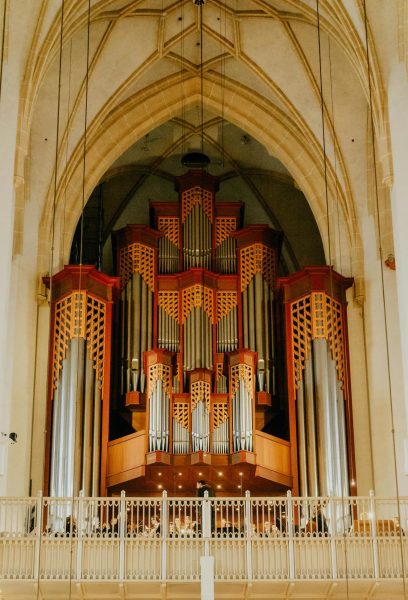
Arguably the greatest composer of music in all of history was a man of God. Born in 1685, Johann Sebastian Bach paved the way for what would become the basis of nearly all western tonal harmony. The legend goes that he composed a church cantata (some of which could be over an hour long) every single Sunday, and his local congregation would sing it the next week. He was a master of several instruments, including the organ and the violin, and he would write incredibly complex and detailed masterpieces for these instruments.
Mr. Bach could have easily taken all of the credit for his musical accomplishments for himself, but rather he signed every one of his publications with the phrase “Soli Deo Gloria,” meaning, “For the glory of God alone.”
Bach’s work caused many to start investigating what made his works so emotional. Many might argue against this, but there is almost certainly a spiritual component to Bach’s writing. Take his music from a godless, atheistic perspective: what could possibly be the reasoning behind why we enjoy listening to him? There is no evolutionary gain from dwelling on Bach’s music, or really any music in general.
There has to be something deeper than the material side of things if we are to take Bach’s music for what it is. That is where God fits into the picture; in fact, He is the whole frame on which the picture is built. Bach shows us how we are to treat music in relation to our Creator: not in spiteful arrogance, but in humble submission, realizing that ultimately our musical gifts come from our Heavenly Father.
Making music is never just about playing the notes correctly or tediously sitting through a rehearsal, but rather it is about the opportunity to serve God with the abilities He has bestowed upon us. Without Him, music would be utterly meaningless.